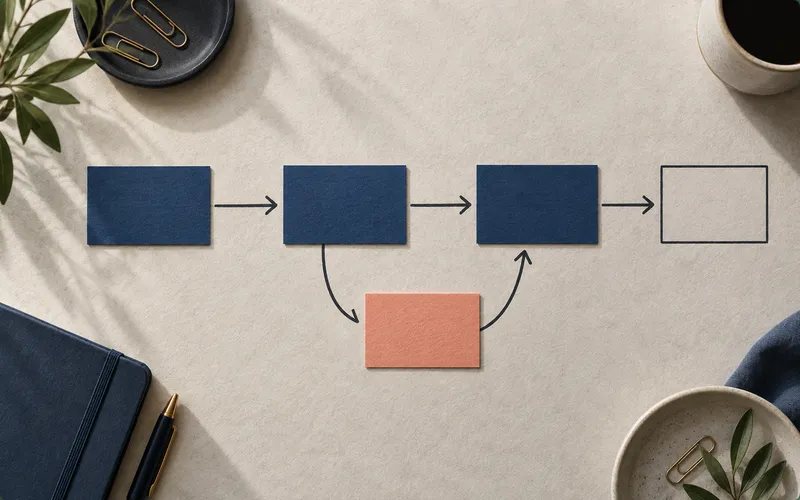
State the test.See the outcome.
Scenario paths
Context
Given describes an initial condition. Include only the setup needed to understand this example.
Path writer ↗Trigger
When names the action, not the hidden code that performs it.
Path writer ↗Outcome
Then should describe a visible message, state or delivery that can be checked.
Path writer ↗Alternate path
Keep a denied or interrupted path separate from the normal path so its expected outcome is unmistakable.
Path writer ↗Boundary
A boundary example can reveal a missing rule. Do not invent a decision for the product owner.
Path writer ↗Shareable steps
A copied scenario is a draft for human review. It has not run against the system.
Path writer ↗One trigger. Two conditions.
Start where the rule applies.
Changed conditionGive the alternate route its own outcome.
Path writer
Enter context, action and outcome for one path, then add a contrasting condition. Copy a reviewable scenario; this does not execute it.
Follow the work
Both paths distinct?
A drafted test, an observed result and a release decision are different events. Keep each one tied to the product you actually checked.